Learn How Digital Skills for workplace have Empowered Communities
by Dr Tatenda Mamina -
Agriculture Business is not only sustainable if done properly. Its one of the oldest business sectors that remains untapped by 3rd world coutries and was ignored during Agricultural revolution by other countries and resulting in nature crisis vs pollution.
This course will take you through the opportunities and how to invest and earn and wisely develop Agriculture based business

 the dual pillars of survivor advocacy and perpetrator rehabilitation to systematically lower recidivism and rebuild community safety.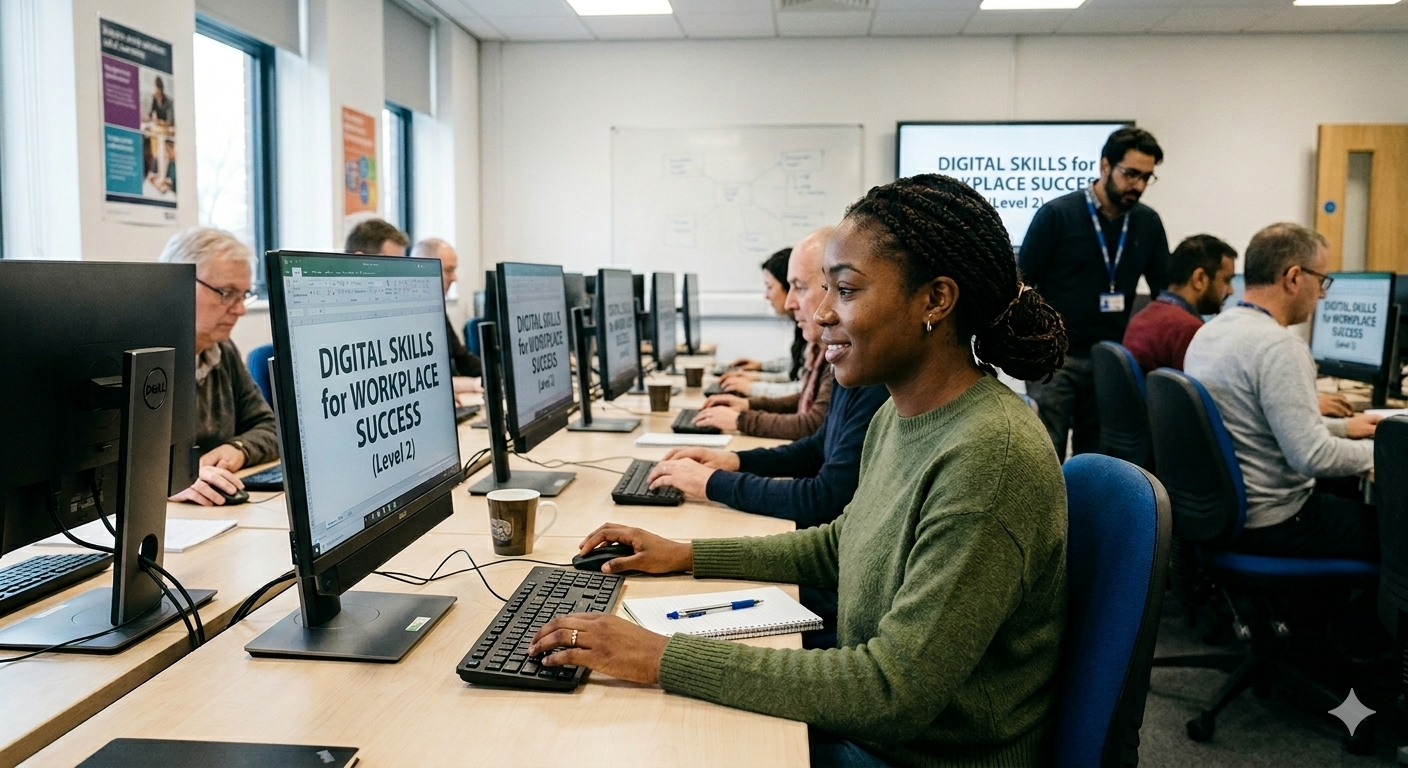

This course equips learners with professional grooming standards, workplace etiquette, communication skills, confidence building, CV preparation, and interview techniques required for employment and career growth.

 Learn essential food safety principles used in restaurants, catering, hotels, and food businesses. This course covers hygiene, contamination prevention, temperature control, cleaning procedures, and safe food handling practices to help maintain a safe working environment.
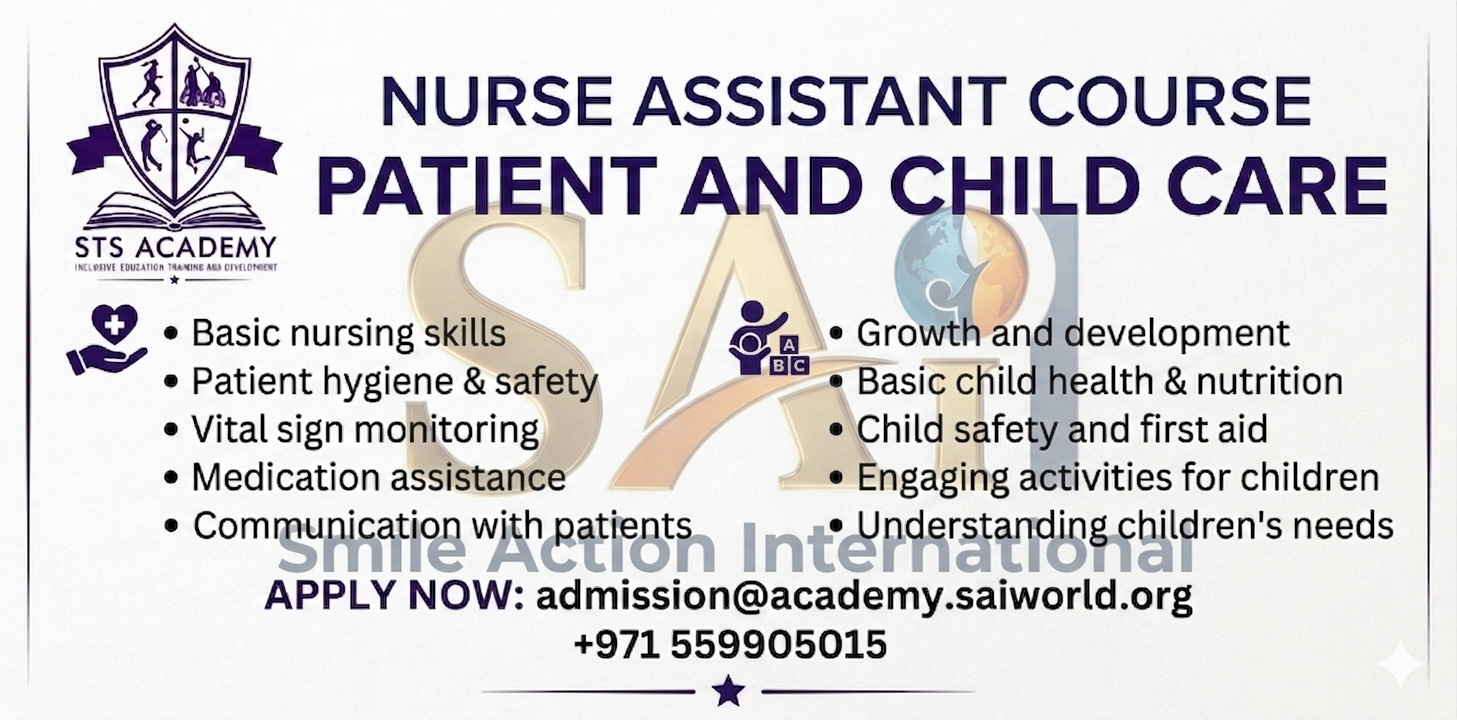
The International Certificate in Healthcare Assistance & Caregiving – Level 2 is a vocational training programme designed to equip learners with the essential knowledge, skills, and professional competencies required to provide safe, effective, and person-centred care in healthcare and caregiving environments.
The programme covers healthcare fundamentals, infection prevention and control, communication skills, personal care, health and safety, record keeping, patient support, and professional ethics. Learners will also complete supervised practical placement to develop workplace competency and real-world experience.
Upon successful completion, learners will have the foundational skills required to support healthcare professionals and provide quality care within hospitals, clinics, residential care facilities, community care settings, and home-based care environments.
Programme Delivery:
• Theory and Practical Training
• Continuous Assessment
• Workplace-Based Learning
• Supervised Practical Placement
Total Programme Duration:
360 Guided Learning Hours (GLH)
Award:
International Certificate in Healthcare Assistance & Caregiving – Level 2

Course Description:
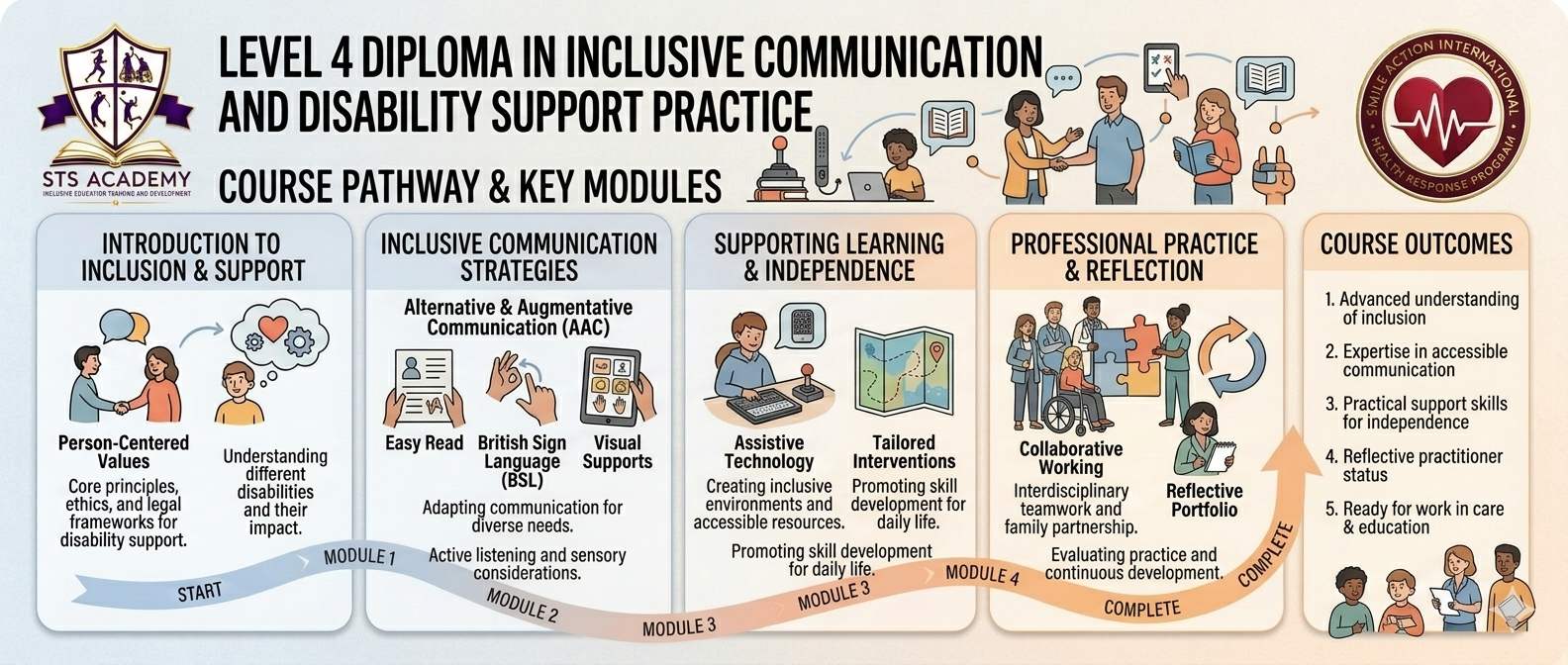
This Level 4 Diploma in Health & Social Care is a vocational qualification designed to develop advanced knowledge, leadership skills, and practical competence in healthcare settings. The programme combines theoretical learning with workplace-based practice to prepare learners for supervisory and senior support roles in health and social care environments.
Learning Outcomes:
 This programme is an advanced vocational qualification in healthcare support practice designed to prepare learners for senior-level assistant roles in clinical, hospital, and community care environments.
The course develops higher-level competencies in patient monitoring, geriatric care, paediatric support, infection control, mental health awareness, and emergency response support.
It is competency-based and aligned with international healthcare support standards, including global patient safety principles and structured care practice frameworks used in professional healthcare environments.
Learners are required to complete both theoretical modules and supervised practical placement to achieve certification.
This module introduces learners to common long-term health conditions and public health issues. It focuses on recognition, basic care support, patient comfort, and referral awareness under supervision.
It aligns with global healthcare principles including WHO guidelines and standard nursing assistant scope of practice.
Learners will be able to:
This module does NOT train learners to:
It trains learners to:
✔ Observe
✔ Support
✔ Report
✔ Care safely under supervision
 Duration
120 Guided Learning Hours (GLH)
Qualification Level: Level 4 (UK RQF Equivalent)
Course Duration: 12 Weeks
Guided Learning Hours (GLH): 480 Hours
Total Qualification Time (TQT): 1200 Hours
Delivery: Online / Blended Learning
Assessment: Assignments, Case Studies, Practical Activities, Final Project
Awarding Body: STS Academy – A Project of Smile Action International 
The International Certificate in Logistics & Supply Chain Operations (Level 3) provides learners with practical and theoretical knowledge in logistics, transportation, warehousing, procurement, inventory management, freight forwarding, customs procedures, and supply chain operations. The programme combines online learning with practical workplace activities to prepare graduates for careers in logistics and supply chain management across commercial, industrial, retail, humanitarian, and international sectors.
 The International Certificate in Leadership Skills Development is designed to equip learners with practical leadership competencies required in modern organisations. Participants will develop skills in communication, team leadership, strategic thinking, decision-making, ethical leadership, emotional intelligence, and change management. The programme combines theoretical knowledge with practical workplace applications and leadership development activities.
Course Duration
8 Weeks
Guided Learning Hours (GLH)
60 Hours
180 GLH
This Level 3 programme provides learners with practical and theoretical knowledge in monitoring and evaluation systems used in development projects, humanitarian programmes, government initiatives, and private sector projects. The course develops competencies in results-based management, indicator design, data collection, data analysis, reporting, and programme evaluation.
Upon successful completion, learners will be able to:
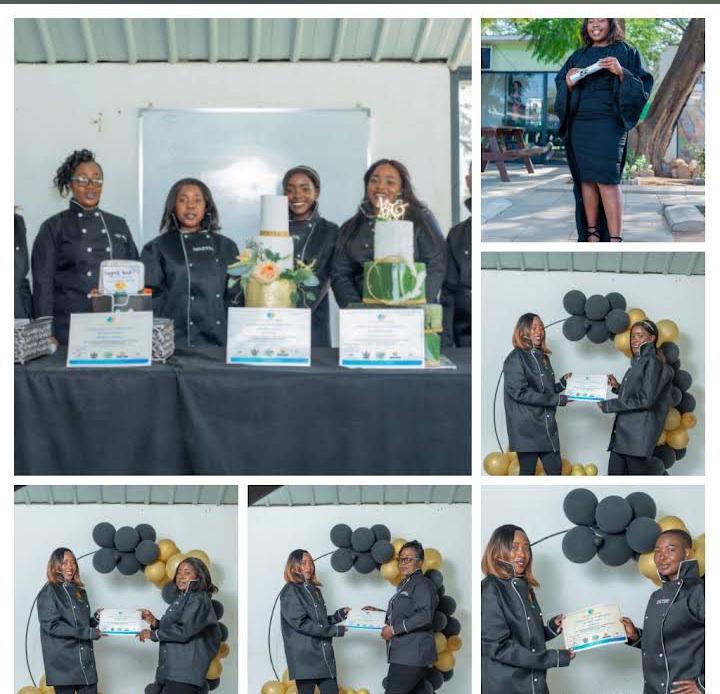
International Certificate in Culinary, Baking & Pastry Arts (Level 3 – Vocational Training) is a 12-week structured vocational programme aligned with international hospitality and culinary education standards (UK/EU-style framework). It develops foundational to intermediate competencies in culinary arts, bakery production, pastry techniques, food safety, and basic culinary business operations.
12 Weeks (360 Guided Learning Hours – GLH equivalent)
Theory: 30%
Practical: 70%
Minimum age: 16+
Basic literacy and numeracy
Interest in culinary or hospitality field
No prior experience required
By the end of this programme, learners will be able to:
Module 1 (Weeks 1–2): Food Safety & Professional Kitchen Practice
Module 2 (Weeks 3–4): Baking Foundations
Module 3 (Weeks 5–6): Bread & Dough Production
Module 4 (Weeks 7–8): Pastry & Snack Production
Module 5 (Weeks 9–10): Cakes & Decoration
Module 6 (Weeks 11–12): Culinary Business & Final Project
Practical Assessments: 70%
Theory Tests: 20%
Final Project: 10%
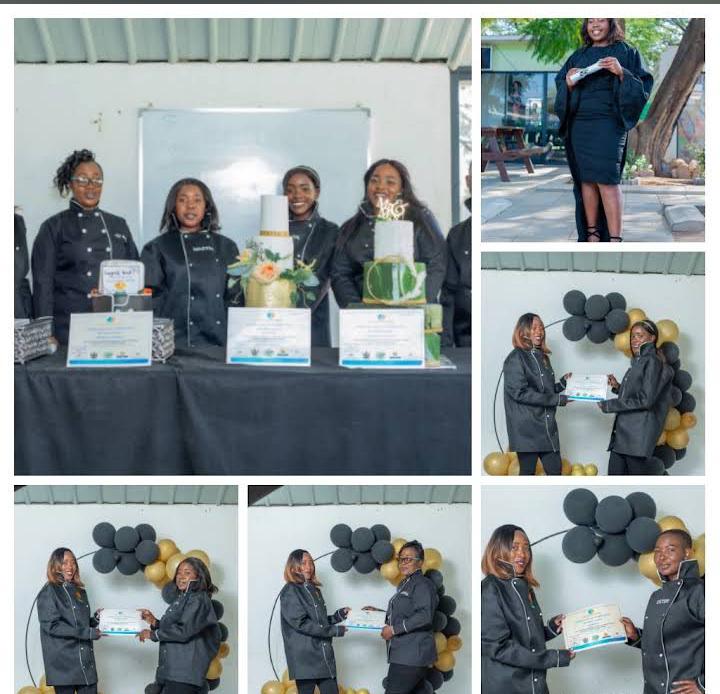 CERTIFICATION
International Certificate in Culinary, Baking & Pastry Arts (Level 3)
Awarded upon successful completion of all assessment requirements.